


Choosing a dental implant provider in Chicago requires checking credentials, imaging technology, treatment scope, pricing, and aftercare. Implant placement is a surgical procedure, so provider qualifications directly affect outcomes. The eight questions below work as a pre-booking checklist. Patients can also review the full range of dental implants in Chicago, IL offered at Wicker Park Dental Group before comparing options.
Is the Dentist Licensed and Trained to Place Dental Implants?
A provider must hold an active Illinois dental license and documented implant training. The Illinois Department of Financial and Professional Regulation (IDFPR) offers an online license lookup. Implant dentistry is not an ADA-recognized specialty, so training levels vary between dentists. Written proof of training should be available on request. Ask about these credentials:
Continuing education hours in implant surgery
Credentials from the American Academy of Implant Dentistry (AAID)
Approximate number of implants placed each year
Also ask whether the dentist places implants routinely or refers cases elsewhere. Specialists, including periodontists, prosthodontists, and oral and maxillofacial surgeons, complete additional residency training.
What Imaging Does the Provider Use Before Placement?
Providers should use 3D cone beam CT imaging to measure bone volume, nerve position, and sinus location before surgery. Standard 2D X-rays do not show bone width or depth. A 3D scan supports accurate implant positioning and shows whether bone grafting or a sinus lift is needed. Candidacy depends on gum health, jawbone density, and controlled medical conditions such as diabetes. Patients with bone loss may still qualify after grafting, as explained in can you get dental implants with bone loss. Wicker Park Dental Group includes a 3D diagnostic CT scan in its single tooth implant fee.
Which Implant Procedures Does the Provider Offer?
A full-service provider offers single implants, implant-supported bridges, snap-in dentures, and full-arch restorations. Treatment type should match the number of missing teeth. Available options include:
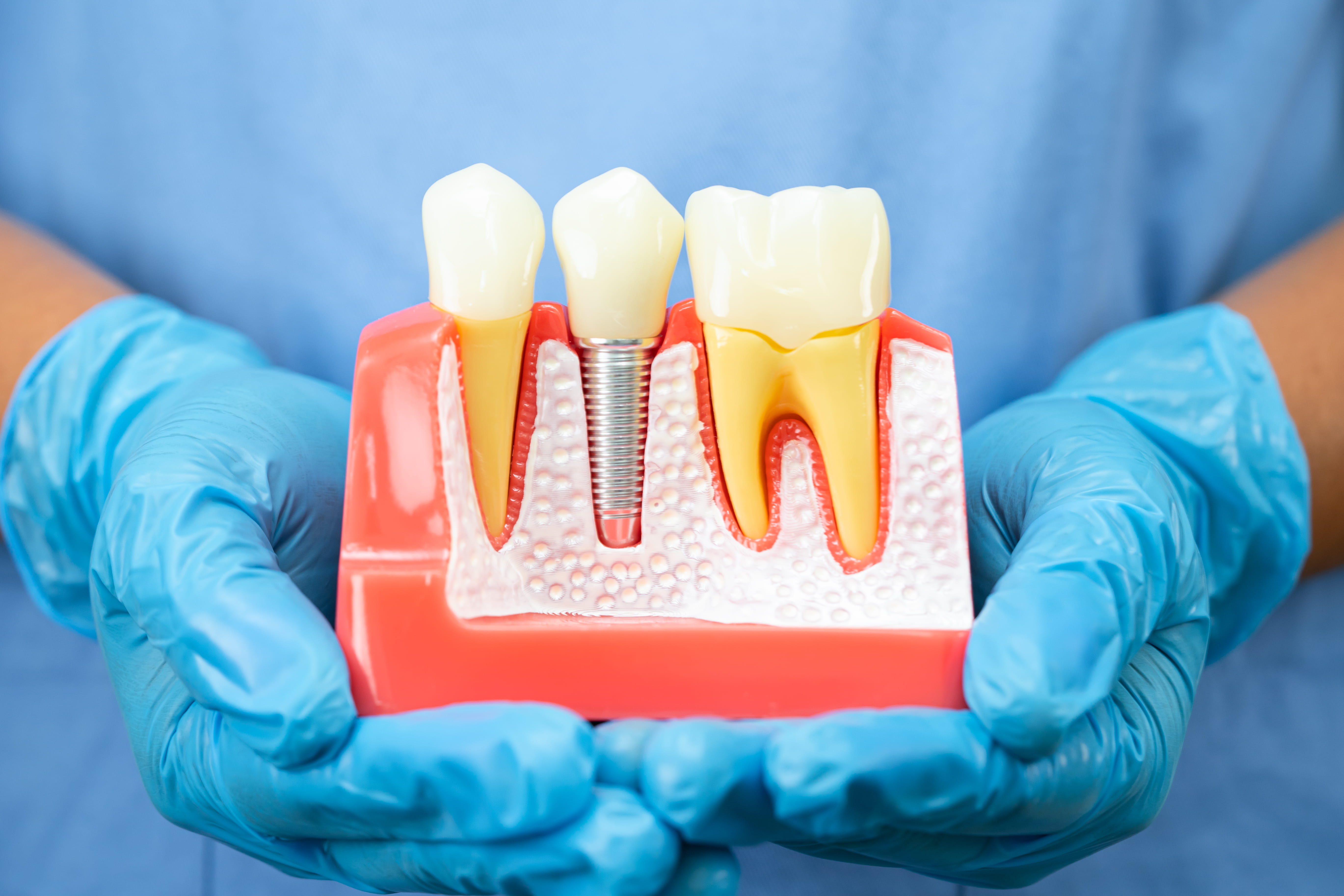
Single tooth implants: one titanium post, an abutment, and a crown replace one tooth.
Implant-supported bridges: implants anchor a bridge that replaces consecutive missing teeth without grinding down adjacent healthy teeth.
Snap-in implant dentures: a removable overdenture attaches to two to four implants.
Full-arch All-on-4: four to six angled implants support a fixed set of teeth.
Implant materials include titanium and ceramic zirconia. Zirconia suits patients with metal sensitivities. Same-day implants suit select cases only. Traditional treatment includes a healing period between placement and the final crown.
Who Performs the Entire Treatment?
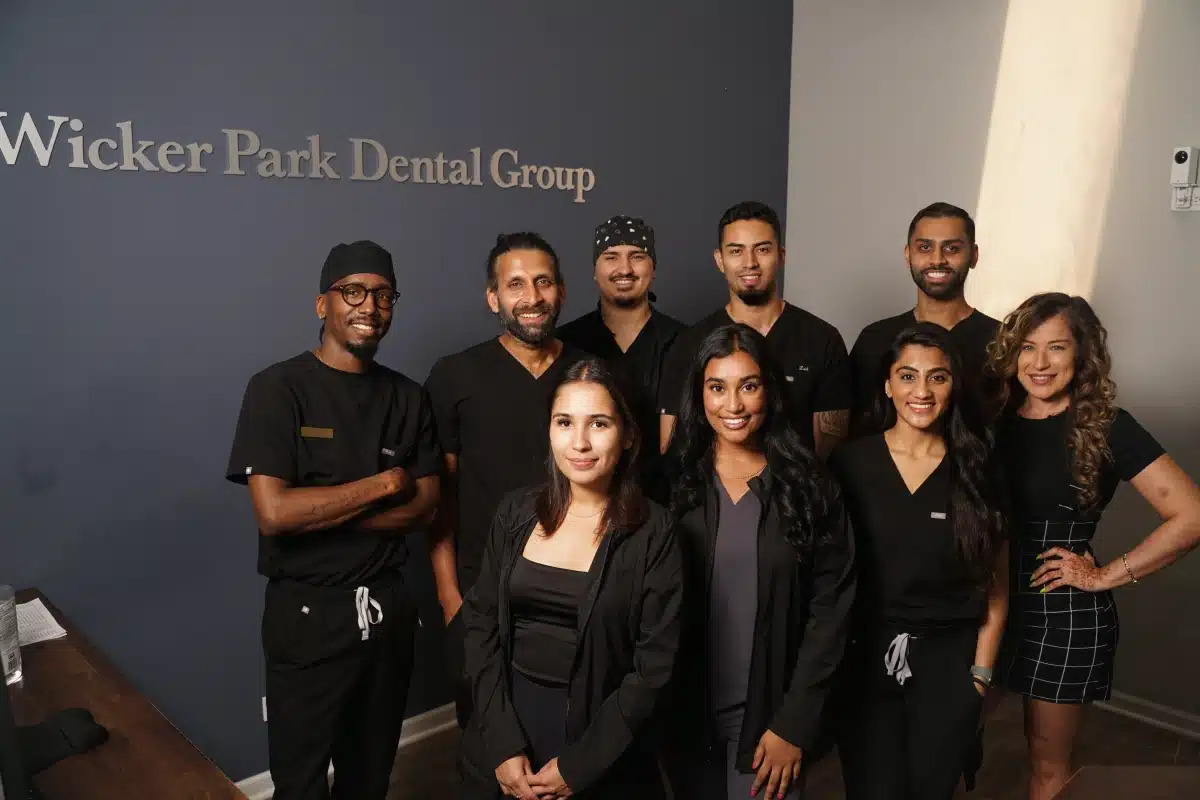
One accountable team should manage planning, surgery, and the final restoration. Care split across outside labs and multiple offices can extend timelines. Ask whether the same dentist places the implant and attaches the final crown. Stages include consultation and imaging, preparatory care, implant placement, healing, and abutment and crown placement. Wicker Park Dental Group uses an in-house dental lab to design crowns, bridges, and dentures. Dr. Brandon Siaj holds a Doctor of Dental Medicine from Midwestern University College of Dental Medicine–Illinois. He oversees treatment from consultation through final restoration.
What Is the Total Cost, and What Does It Include?
Total cost depends on implant type, preparatory procedures, and the final restoration. Request an itemized estimate covering imaging, surgery, abutment, crown, and extractions. Confirm whether sedation, temporary teeth, and follow-up visits are included. The single tooth fee includes the CT scan, implant post (2,603),abutment(1,168), and crown ($1,873). Review the implant pricing breakdown for financing examples.
Does the Provider Accept Insurance or Offer Financing?
Many Chicago providers file claims with PPO plans and offer financing for remaining balances. Confirm whether the office obtains pre-treatment estimates. Pre-treatment estimates show the insurer’s expected payment before surgery. Request written estimates before committing to treatment. Wicker Park Dental Group works with Delta Dental, Cigna, Aetna, MetLife, Guardian, and Humana. Implant coverage varies by plan. Financing options include CareCredit with 0% promotional terms and an in-house dental savings plan for uninsured patients.
What Do Patient Reviews and Results Show?
Independent reviews show how a provider handles communication, comfort, and follow-up care. Check ratings on platforms such as Google, Yelp, and Healthgrades. Look for repeated mentions of pricing transparency and pain management. Also ask to see case photos of procedures similar to the planned treatment.
What Are the Success Rate, Risks, and Aftercare Plan?
Dental implants show success rates above 95% in suitable candidates. Risks include peri-implantitis, a bacterial gum infection, and failed osseointegration. Osseointegration, the fusion of implant and jawbone, typically takes several months. Smoking and uncontrolled diabetes raise these risks. Early detection improves peri-implantitis treatment, so routine exams matter. Ask each provider about:
Follow-up visit schedule
Cleaning frequency around implants
Emergency access if complications occur
Written guidance on diet and hygiene after surgery
Also ask whether complications are treated in-house or referred elsewhere.
How Do I Book an Implant Consultation in Chicago?
Book online to schedule an implant evaluation at 1121 N Western Ave #1S, Chicago, IL 60622. New patients can receive X-rays and an exam for $139. The evaluation covers health history, bite examination, and imaging to determine candidacy for dental implants in Chicago, including cases that need bone grafting. Contact Wicker Park Dental Group to confirm availability.
FAQs
How much does a single dental implant cost in Chicago?
Wicker Park Dental Group lists $5,644 total for a single tooth implant, covering the CT scan, implant post, abutment, and crown.
How long does the dental implant process take?
Treatment spans several months because the implant must fuse with the jawbone before the final crown is placed.
Can a general dentist place dental implants?
Yes, a licensed general dentist can place implants when they have documented implant training.
Can I get dental implants with bone loss?
Often yes, because bone grafting or a sinus lift can rebuild bone before placement.
Does dental insurance cover implants?
Coverage varies by plan, so request a pre-treatment estimate from the provider.
Ready to see us?
New patients are always welcome.
Book an appointmentCall us (773) 276-5566