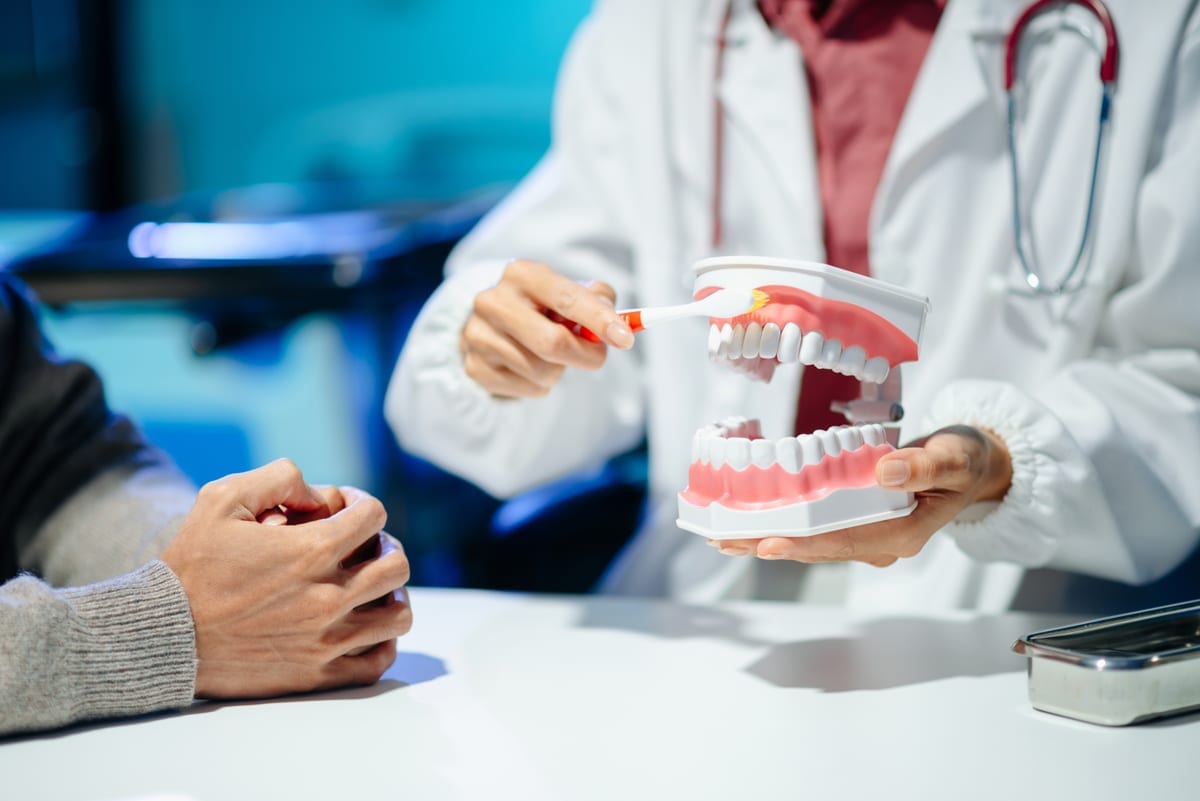


When you settle into the chair for a checkup, it might feel like your hygienist and dentist are simply counting teeth or giving your smile a quick polish. In reality, a modern checkup is a multi-layered diagnostic screening. At Wicker Park Dental Group, Dr. Brandon Siaj and our clinical team utilize a methodical routine dental exam process designed to evaluate your entire oral cavity, jaw structure, and soft tissues. Understanding what occurs behind the scenes helps demystify your appointment and underlines why regular preventive care is vital for long-term health.
What Does a Dentist Look for During a Routine Dental Exam?
During a routine checkup, your dentist evaluates far more than tooth decay. The primary focus areas include checking for early cavities, evaluating gum pocket depths for periodontal disease, performing an oral cancer screening on soft tissues, inspecting existing restorations for structural wear, and checking jaw joint (TMJ) alignment.
Beyond Cleaning: The Complete Diagnostic Evaluation
Many patients view dental appointments primarily as a cleaning. While removing calcified plaque (tartar) is essential, the clinical examination performed by your dentist is what catches silent, painless conditions before they turn into major emergencies.
Dental health problems like early interproximal cavities, subgingival tartar, micro-cracks, and initial bone loss rarely cause discomfort in their infancy. By the time a tooth aches or a gum bleeds severely, the underlying condition has often progressed significantly. A structured exam acts as an early warning system.
The Key Stages of a Comprehensive Dental Examination
During your visit at our Chicago practice, your doctor evaluates several distinct anatomical systems. Here is a step-by-step breakdown of what your dentist is examining while you rest in the chair.
1. Tooth Integrity and Enamel Health
The most familiar part of the exam involves checking the visible surfaces of your teeth. Your dentist uses a specialized dental mirror and fine explorer instrument to inspect enamel density and structure:
- Micro-Cavities & Demineralization: Detecting soft spots where enamel acid wear has begun, allowing for remineralization before a filling is necessary.
- Structural Cracks & Fractures: Spotting craze lines or hairline fractures caused by teeth grinding (bruxism) or uneven bite forces.
- Interproximal Decay: Identifying decay forming hidden between adjacent teeth where toothbrush bristles cannot reach.
2. Periodontal Health and Bone Support
Your teeth rely on a healthy foundation of soft tissue and alveolar bone. During a comprehensive periodontal evaluation, a periodontal probe gently measures the depth of the sulcus (pocket) between your tooth and gum line:
- 1 to 3 Millimeters: Indicates healthy, firm tissue tightly attached to the tooth root.
- 4 Millimeters or More: Signals localized inflammation, plaque entrapment, or early periodontal disease.
- Bleeding Points & Tissue Color: Healthy gums appear firm and light pink. Redness, swelling, or bleeding during probing points to active infection.
3. Oral Cancer and Soft Tissue Screening
One of the most critical elements of every routine visit is a thorough oral cancer screening. Your dentist systematically evaluates the soft tissues inside and around your mouth:
- Visual Examination: Checking the tongue, cheek linings (buccal mucosa), floor of the mouth, hard and soft palates, and tonsillar areas for unusual red or white patches (erythroplakia or leukoplakia).
- Palpation: Gently feeling the neck, jawline, and lymph nodes for unexplained swelling, firm lumps, or tenderness.
Detecting soft tissue abnormalities early dramatically improves treatment outcomes, making this quick screening a vital part of every visit.
4. Existing Restorations and Appliances
Dental restorations like fillings, crowns, bridges, and implants are durable, but they experience constant wear from chewing forces. During your checkup, your dentist evaluates:
- Margin Integrity: Ensuring the borders between fillings or crowns and your natural enamel remain tightly sealed so bacteria cannot seep underneath.
- Structural Wear: Identifying chipped porcelain, worn composite resin, or loose crown margins.
- Dental Implants: Confirming that implant posts remain firmly anchored in the jawbone without surrounding tissue inflammation (peri-implantitis).
5. Occlusion, Bite Alignment, and TMJ Function
Your teeth, jaw joints, and facial muscles function as an interconnected mechanical system. Your dentist checks your temporomandibular joints (TMJ) and bite dynamics by:
- Checking Joint Movement: Listening for clicking, popping, or shifting as you open and close your mouth.
- Evaluating Wear Patterns: Inspecting tooth edges for flattened surfaces or notched enamel (abfraction) caused by nocturnal clenching or grinding.
- Bite Symmetry: Ensuring upper and lower teeth meet evenly without placing excess pressure on individual restorations.
If you’re interested in the factors affects dental frequency, then you may like this article
Modern Technology Used During Your Exam
To perform these evaluations with precision, Wicker Park Dental Group utilizes state-of-the-art diagnostic tools:
| Technology | Clinical Purpose | Patient Benefit |
| Digital X-Rays | Captures detailed images of bone levels, tooth roots, and interproximal surfaces. | Uses up to 80% less radiation than traditional film with instant image viewing. |
| Intraoral Cameras | Projects high-definition, magnified images of individual teeth onto a chairside monitor. | Allows patients to see exactly what the dentist sees in real time. |
| 3D CBCT Scanning | Provides three-dimensional volumetric views of jaw structures and nerves when needed. | Essential for precise implant planning and complex anatomical evaluations. |
What Happens After Your Examination?
Once the diagnostic evaluation is complete, your dentist synthesizes their findings into a clear, personalized treatment plan:
- Review Findings: You will look at digital X-rays and intraoral photos together to understand your current health status.
- Determine Cleaning Level: Depending on gum pocket readings, your team will confirm whether a standard preventive cleaning or specialized periodontal maintenance is needed.
- Prioritize Care: If cavities or broken restorations are identified, care is prioritized—focusing on urgent needs first before moving to elective cosmetic adjustments.
- Establish Visit Timing: Based on your overall risk profile, your dentist recommends your next return interval (such as 3, 4, or 6 months).
Preventive Care in Wicker Park, Chicago
At Wicker Park Dental Group, Dr. Brandon Siaj and our team believe that thorough diagnostic exams are the key to lifetime oral health. Located right in the heart of Wicker Park, our practice provides welcoming, precise dental care tailored to your lifestyle. By identifying subtle changes early, we help Chicago patients avoid unnecessary discomfort, preserve natural tooth structure, and maintain confident smiles.
Ready to stay proactive about your oral health? Reach out to our team today to schedule your comprehensive dental checkup and experience detailed, compassionate care!
Frequently Asked Questions
1. Are dental X-rays necessary at every routine exam?
Not always. The frequency of digital X-rays depends on your individual cavity risk, age, and periodontal history. Low-risk adult patients typically require bitewing X-rays once every 12 to 18 months, whereas patients with active decay or ongoing gum therapy may need them more frequently.
2. Why does the dentist poke my gums with a small metal tool?
That tool is a periodontal probe, a specialized measuring instrument with soft markings. Your dentist or hygienist uses it gently to measure the space (pocket depth) between your tooth and gum tissue. Pockets deeper than 3 millimeters can indicate early gum disease or bone loss.
3. What is the dentist checking when they feel my neck and jaw?
This is an extraoral cancer and lymph node screening. Your dentist feels for swollen lymph nodes, firm lumps, or tenderness along your jawline and neck that could indicate soft tissue infection or underlying cellular changes.
4. How long does a typical routine dental exam take?
A comprehensive exam performed by your dentist usually takes between 15 to 30 minutes as part of a standard 60-minute visit that includes professional teeth cleaning and diagnostic imaging.
5. Does a routine dental exam hurt?
No, a routine checkup is non-invasive and generally painless. If you have sensitive teeth or inflamed gums, let your dental team know beforehand so they can take extra precautions or apply topical desensitizing gel.