
Dental implants offer a long-term solution for missing teeth, providing both function and aesthetics. However, just like natural teeth, they need proper care to maintain their longevity. One question that many patients have is: how can you floss with dental implants? Though it might seem tricky at first, flossing around implants is crucial to ensure the health of the surrounding gum tissue and bone.
Let’s explore the steps and techniques for flossing with dental implants to maintain a healthy, beautiful smile.
Why Flossing With Dental Implants Is Important?
Just like natural teeth, dental implants are vulnerable to plaque buildup, especially where the implant meets the gumline. Plaque, if not removed, can lead to gum inflammation and other issues like peri-implantitis—a condition similar to gum disease that affects implants.
By flossing regularly:
- You remove debris that brushing can’t reach.
- You prevent the buildup of plaque around the implant.
- You protect the surrounding gum tissue and bone from infection.
Steps to Floss With Dental Implants
Flossing with dental implants isn’t complicated, but it does require the right tools and techniques. Here are some simple steps you can follow:
- Choose the Right Floss
Regular dental floss may not be sufficient for implants. Instead, use implant-specific floss or unwaxed tape floss. Superfloss, which has a stiffer end for easier threading, is also a great option. - Thread the Floss
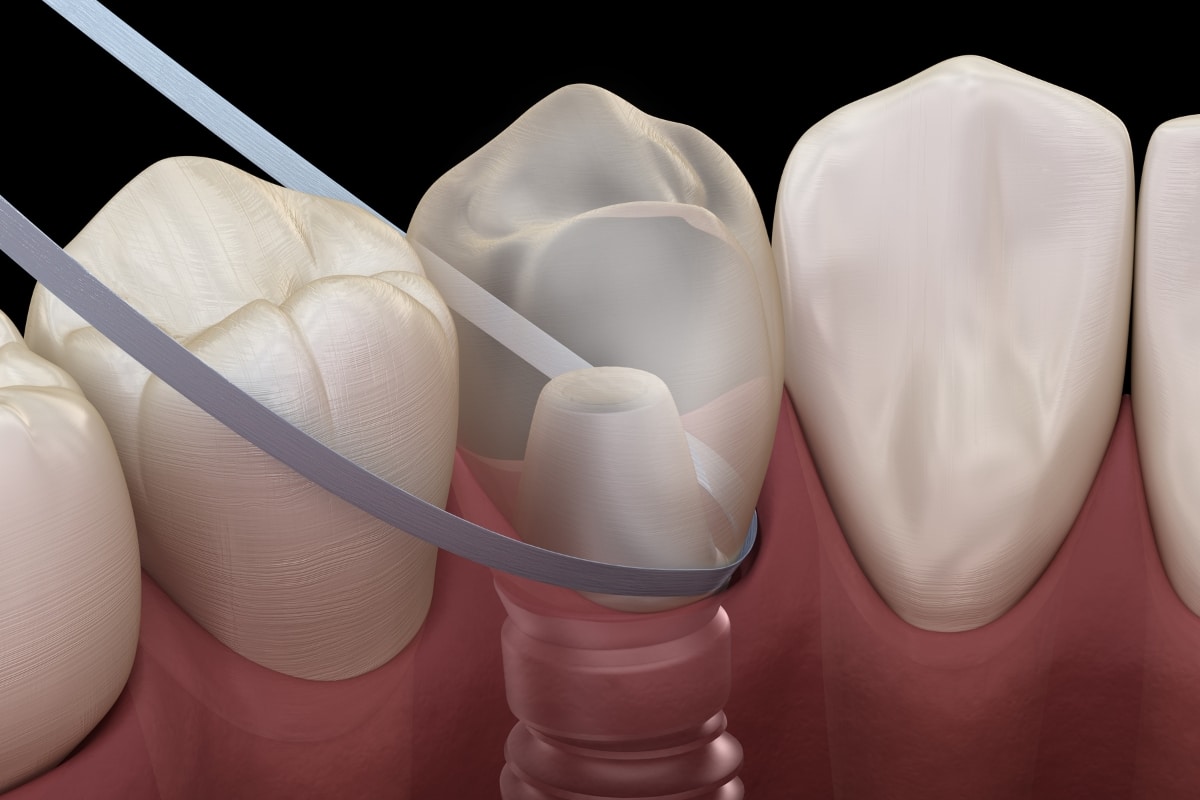
Thread the floss gently between the implant and your gum. Ensure it reaches the base of the implant post, but be careful not to force it. The goal is to remove debris without damaging the gum tissue. - Form a “C” Shape
Once the floss is in place, curve it around the implant in a “C” shape, hugging the implant post. This will help clean all sides of the implant more effectively. - Move Up and Down
Use a gentle up-and-down motion to clean along the gumline and the sides of the implant. Avoid sawing back and forth, as this can cause irritation or damage to the gums. - Repeat Between All Implants
If you have multiple dental implants, repeat the process for each one. Regular flossing will help keep your implants in excellent condition for years.
What Else Can You Use to Floss With Dental Implants?
If traditional flossing feels uncomfortable, you’re not alone. Many individuals with dental implants find water flossers or interdental brushes easier to use. Here’s a closer look at these alternatives:
- Water Flossers: These devices shoot a stream of water between your teeth and around your implants. They are particularly helpful for individuals with multiple implants or for those who find flossing tricky. Water flossers can remove food particles and plaque efficiently.
- Interdental Brushes: These small brushes are designed to clean between teeth and implants. They come in various sizes, so choose one that fits comfortably between your implants and natural teeth. The soft bristles are gentle on the gums while effectively removing debris.
Both of these alternatives can complement traditional flossing, ensuring comprehensive cleaning around your dental implants.
How Often Should You Floss?
Flossing is an essential part of your oral hygiene routine, especially with dental implants. But how often should you floss after getting dental implants? Ideally, you should floss daily, just like you would with natural teeth. Flossing helps maintain healthy gums and prevents issues from developing around your implants. Consistency is the key to long-term implant success.
Additionally, seeing a dentist in Chicago for regular cleanings is essential for maintaining your dental health. During these visits, your dentist can check your implants, clean areas that may be hard to reach, and provide personalized advice on your flossing technique.
Common Mistakes to Avoid When Flossing With Implants
While flossing with implants is essential, it’s equally important to do it right. Here are some mistakes to avoid:
- Forcing the Floss: Aggressive flossing can damage the gum tissue surrounding the implant. Always be gentle.
- Skipping Flossing: Even though implants are made from durable materials like titanium, the surrounding gums and bones need care. Skipping flossing can lead to complications like gum disease.
- Using the Wrong Products: Not all floss or cleaning tools are suitable for dental implants. Make sure you use products designed specifically for implant care.
Regular Dental Checkups are a Must
Flossing at home is vital, but it doesn’t replace the importance of professional cleanings. Schedule regular checkups with your Chicago dentist to ensure your implants are in top condition. Regular cleanings can prevent plaque buildup in areas that are harder to reach with floss, water flossers, or brushes.
If you have dental implants in Chicago, maintaining your oral hygiene with proper flossing techniques will go a long way in keeping your implants healthy and functional. During your dental visits, don’t hesitate to ask your dentist to demonstrate the correct flossing technique for your specific implants.
Maintaining Healthy Dental Implants
Maintaining your dental implants involves more than just brushing. Proper flossing is crucial for preventing plaque buildup and protecting your gum tissue. Whether you prefer traditional floss, water flossers, or interdental brushes, the key is consistency. Follow the steps mentioned here to floss with dental implants and keep them in top condition.
Remember, if you’re looking for guidance on how to maintain your dental implants or if you’re in need of a cleaning, consult a dentist. They can provide personalized advice on the best flossing techniques and help you maintain your dental implants in Chicago for years to come.